
Getting More Done Is Not the Same as Getting Somewhere
Productivity has always been a big conversation in the workplace, and Artificial Intelligence has taken that conversation to a new level.
We can now produce first drafts in seconds, analyse information faster, automate repetitive tasks, and complete work that once required considerably more time and effort.
For individuals, the possibilities are enormous.
There is, however, an interesting question emerging for organisations.
What happens when everyone becomes more productive individually, but the work still depends on people getting things done together?
Most workplaces are built around interdependence. One person's work becomes someone else's input. Decisions require different perspectives. Clients need expertise from several areas. Projects cross teams, functions, and sometimes countries.
Getting more done individually is useful, but it does not automatically mean we are getting somewhere collectively.
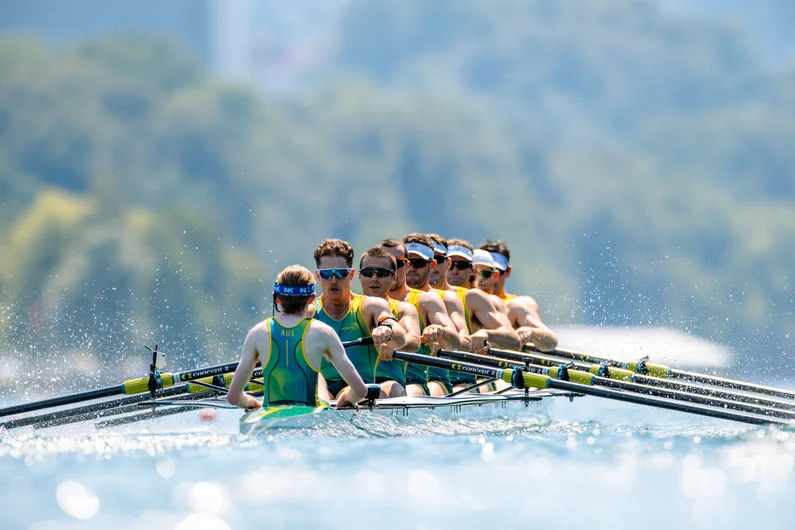
It reminds me of a rowing crew.
You can put eight incredibly strong people in a boat and ask each of them to row as hard as they possibly can. If their timing is different, their technique is inconsistent and everyone is concentrating entirely on their own performance, all that effort will not produce the result they expect.
The strength matters.
So does what happens between them.
Work is becoming a little like that.
AI is increasing what each of us can contribute, which should be good news. The challenge is making sure that greater individual capability translates into shared outcomes.
That brings us to COLLABORATION, the fourth quadrant of the Emotional Navigation Roadmap™.
Collaboration is sometimes reduced to teamwork, but there is much more going on beneath the surface.
People need to communicate in ways that others can understand. They need to work through disagreement without damaging relationships. They need to align around outcomes, influence each other, share knowledge and help other people develop.
Those capabilities become more important as the work itself becomes more complex.
There is also an interesting paradox developing with AI. The more capable we become of working independently, the easier it may become to do exactly that.
Why ask a colleague for their thoughts when AI can give you ten ideas immediately? Why spend time talking something through when you can generate a solution yourself? Why involve others early when technology allows you to arrive at the meeting with something already built?
There will be plenty of situations where that efficiency makes sense.
There will also be situations where it quietly removes the very conversations that create alignment, commitment and shared ownership.
Anyone who has ever tried to implement a great idea that nobody else feels part of will understand the difference.
Collaboration requires us to think beyond the quality of our own contribution and consider how that contribution fits with everyone else's.
Sometimes that means slowing down enough to involve someone earlier. Sometimes it means allowing an idea to change because another perspective improves it. At other times it means having the difficult conversation everyone has been avoiding because unresolved tension is starting to affect the work.
None of those things are particularly efficient in isolation.
A ten minute conversation takes longer than sending a message. Working through disagreement takes longer than making the decision yourself. Developing someone takes longer than doing the task for them.
Yet efficiency at the individual level can become incredibly inefficient when the whole system is taken into account.
The rowing crew understands this.
Nobody stops pulling hard. Nobody becomes less capable. Nobody gives up their individual responsibility.
They learn how to use their capability together.
I suspect that will become increasingly important as AI continues to change the way we work.
Technical capability will become easier to access, information will become easier to find, and many tasks will become faster to complete.
The value we create from all of that will still depend heavily on what happens when people need to work together.
Perhaps the question we could be asking is no longer simply, "How much more can I get done?"
It might be worth asking, "Where are we trying to get to, and are we pulling in the same direction?"