
Emotional Awareness at Work: Recognising What You Feel
Have you ever walked out of a meeting knowing that something did not feel quite right, but you could not put your finger on what it was?
Perhaps the conversation went well enough and nothing particularly difficult was said, yet you carried something away with you. An hour later you are still thinking about it. By the afternoon you are becoming frustrated with something completely unrelated and eventually you realise that whatever happened in that meeting has been sitting with you all day.
We experience emotions constantly, yet we are not always particularly good at recognising them while they are happening.
That can be a problem at work because emotions do not wait for us to identify them before they start influencing what we do.
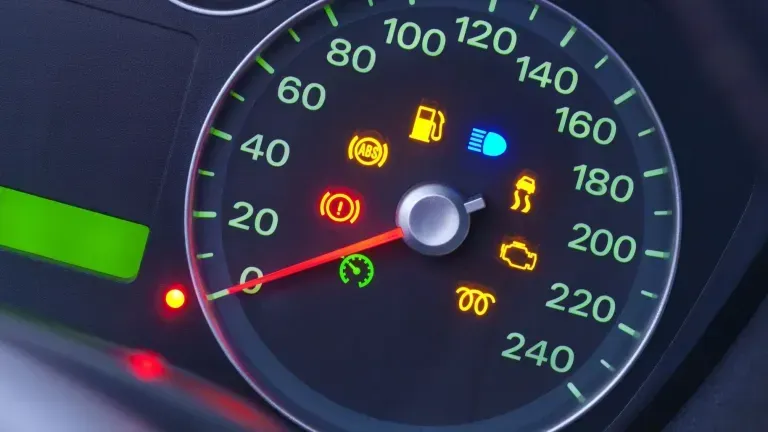
I think of emotions a little like the warning lights on the dashboard of a car. Most of the time we drive without paying much attention to them, but when one lights up, it is trying to tell us something.
The light itself is not necessarily the problem. It is information about something that requires our attention.
You could cover it with a piece of tape and continue driving, but whatever caused it to come on would still be there.
We often do something similar with emotions.
We tell ourselves to get on with it. We put the difficult conversation aside because there is another meeting starting. We ignore the frustration because there is work to finish. We convince ourselves that something does not bother us when our behaviour is suggesting otherwise.
Modern workplaces make this particularly easy to do.
We move quickly from one thing to another, often without much space between them. A difficult conversation finishes and we are straight onto a video call. An email creates anxiety and seconds later we are responding to a Teams message. Something disappoints us in the morning and we carry it quietly into every interaction that follows.
We rarely get the luxury of dealing with one thing at a time.
That makes Emotional Awareness, one of the competencies within CLARITY on the Emotional Navigation Roadmap™, increasingly important.
Emotional Awareness is the ability to notice emotions and name how you are feeling.
That might sound fairly basic, but there is a significant difference between knowing that you are emotional and understanding what emotion you are actually experiencing.
We often use broad descriptions such as stressed, upset or frustrated when there may be something much more specific going on underneath. What feels like anger might actually be disappointment. What we describe as stress could be uncertainty. Frustration with a colleague might have more to do with feeling ignored or undervalued.
The more accurately we can identify what we are feeling, the more useful the information becomes.
This does not mean analysing every emotion that appears throughout the day. That would probably become exhausting in itself.
It is more about noticing when something changes.
Perhaps your energy drops after a particular conversation. You find yourself becoming unusually defensive. You start avoiding someone. Your patience disappears more quickly than normal or you keep replaying something in your head long after it happened.
Those are useful signals.
Instead of immediately pushing them aside, it can be worth asking yourself what is going on.
What am I actually feeling here? What happened just before I started feeling this way? What might this emotion be telling me?
Sometimes the answer will be obvious. At other times it might take a little longer.
The important thing is that we become curious enough to look.
Emotional awareness does not make difficult emotions disappear, and that is not the goal. Every emotion has a role to play and some of the uncomfortable ones can provide incredibly useful information.
The advantage comes from recognising the warning light before we have been driving with it on for three weeks.
The pace of work is unlikely to slow down to give us more time to process everything we experience. If anything, the opposite is probably true.
That means we need to become more deliberate about noticing what is happening within us while everything else is happening around us.
So the next time something feels off, resist the temptation to simply get on with your day.
Take a moment to check the dashboard.
There might be something worth paying attention to.